
Reflecting on the Impact of Resentencing
For decades, young people in New Jersey were sentenced to a mandatory minimum of at least 30 years in prison and often more—without any opportunity for parole—for homicide offenses committed as children. These sentences left no room for growth, rehabilitation, or redemption.
In 2021, the firm helped challenge the constitutionality of that approach in State v. Comer, filing a friend-of-the-court brief and arguing before the New Jersey Supreme Court alongside co-counsel, the Rutgers Criminal and Youth Justice Clinic, that a mandatory 30-year parole bar did not account for the factors at play when the defendant is a minor at the time an offense is committed. We urged the Court to recognize what science and experience show: Children are fundamentally different from adults, and many young people mature and transform long before 30 years have passed.
Our brief shared stories of individuals across the country who rebuilt their lives after incarceration—becoming social workers, business owners, teachers, and advocates. We also highlighted five New Jersey cases where people had demonstrated profound growth but remained barred from release.
One of those individuals was Christopher White. Chris was 17 years old when he was convicted for his role in a robbery and murder. By the time we filed the brief, he had spent nearly 30 years in prison and had shown remarkable change—taking responsibility for his actions, mentoring others, and living with purpose. He served as a clerk in the prison infirmary, facilitated a mentoring program, earned his associate degree from Raritan Valley Community College, and was pursuing a bachelor's degree in criminal justice studies.
In State v. Comer, the New Jersey Supreme Court ruled that the state's mandatory 30-year parole bar was unconstitutional because "it does not conform to contemporary standards of decency." The Court held that people sentenced to long prison terms as children are entitled to petition for release after serving 20 years, recognizing their capacity for growth and rehabilitation.
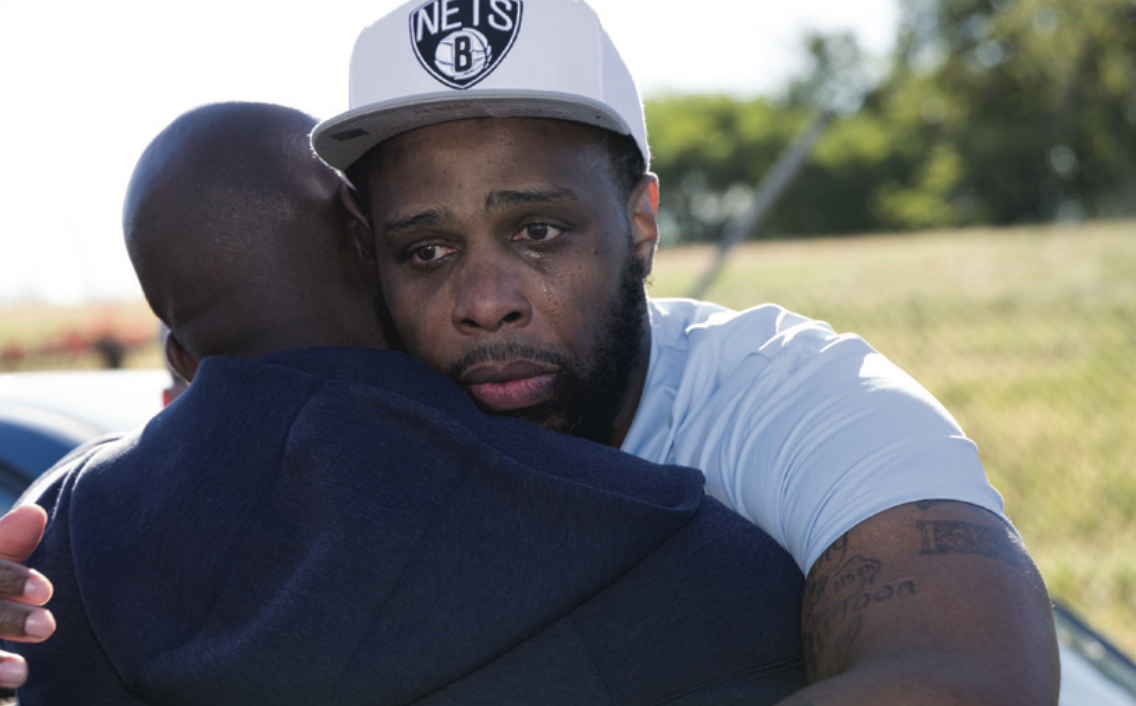
Chris was one of the first beneficiaries of a "Comer resentencing." He had been out of custody for nearly two years when James Comer, the individual who brought the constitutional challenge that led to the landmark ruling, was finally released from prison. Chris greeted James at the prison gates; embracing each other, Chris told James that he was free because of his groundbreaking case.
Recently, Alexander Shalom spoke with Chris to ask about his role in the Comer decision, his life after release, and his meeting with James.
Life After Release
Q: What have you been doing since you were released?
In my first months home, I traveled with my girlfriend to lots of places I'd never been before. My favorite place was the Bahamas—the country is beautiful and the water is amazing. After that, I got a job at a hospital in material management, the department that handles supplies throughout the building. It's a great job, with great people; it provides steady work and benefits.
Q: What did it mean to you to get to greet Mr. Comer upon his release?
It meant a whole lot to have an individual who spearheaded the whole legal fight. It was my duty to say thank you to that brother, because he started a movement like no other through his pursuit of justice.
Q: What did it mean to you to be able to tell your story to help urge the Court to provide people in your position an opportunity for release?
It gave me the opportunity to show them that I am a changed individual. I am not the same person who committed a crime 32 years ago. I don't have the same mindset; my decision-making skills have improved. It allowed me the opportunity to show them who I really am.
Q: The case you were involved in helped dozens of people in New Jersey who had been serving very long sentences for actions that occurred when they were children. Are there other similar cases you hope to see in the future? What's next?
I've actually been able to testify as a witness in a Comer hearing. I appeared before the same judge who had released me a few months earlier to testify on behalf of another person who was sentenced for a crime he committed as a child. I was able to show the judge that I had a state job and was now out here advocating for other people. I want to build on that by continuing the mentoring work I started at Northern State Prison. Mentorship would have made a huge difference in my life; I want to help the next generation.
Through this work, our firm has helped open the door to second chances for dozens of people in New Jersey—affirming that accountability and redemption can coexist, and that meaningful change should be recognized.